
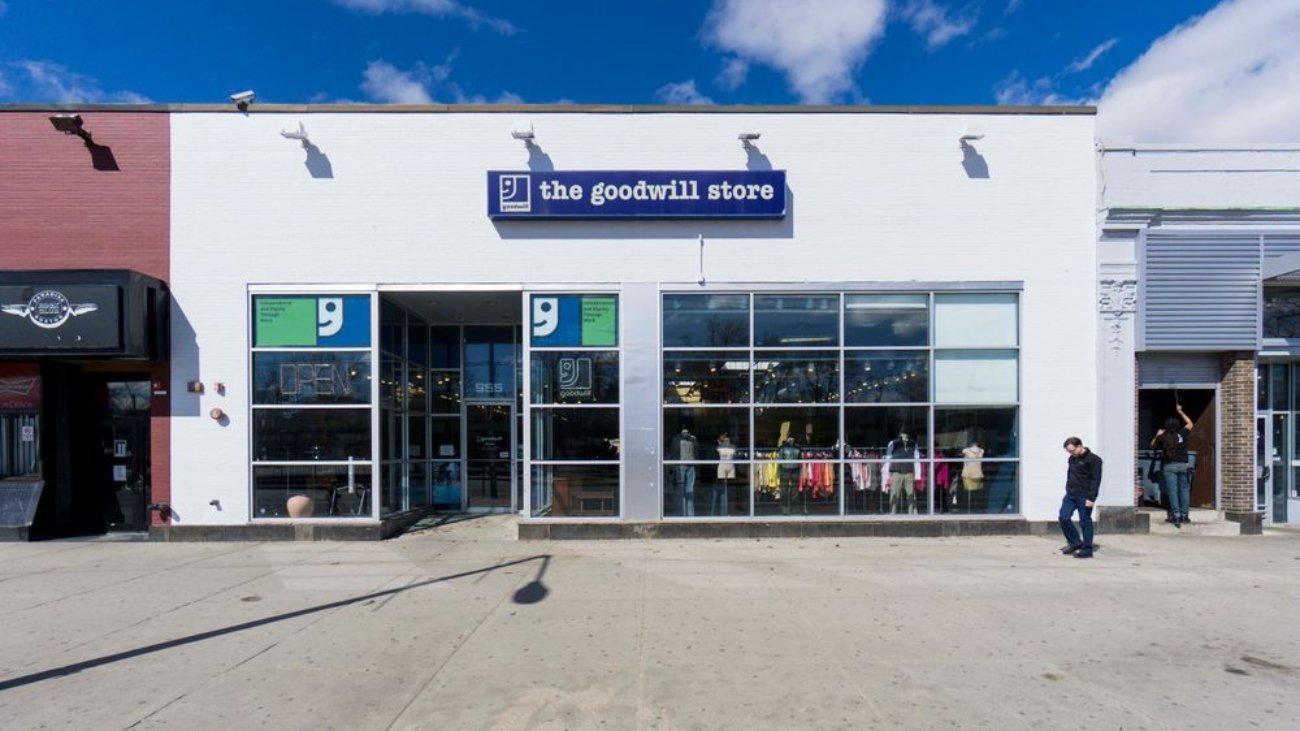
If you’ve seen social media posts or local news about Goodwill stores closing, you’re not alone in wondering whether the whole organization is in trouble. The short answer is no — Goodwill is not going out of business. But the longer answer is more useful, because it explains why some stores do close, why that doesn’t mean what people think it means, and how to figure out what’s actually happening near you.
Goodwill Is Not One Company — That Distinction Matters
The most common reason people jump to conclusions about Goodwill “going under” is a basic misunderstanding of how the organization is structured. Goodwill is not a single company with one set of finances and one headquarters calling all the shots.
Instead, Goodwill operates as hundreds of independent regional and local nonprofits. They share a brand name and follow common guidelines set by Goodwill Industries International, but each regional organization runs its own finances, hires its own staff, and makes its own decisions about stores.
Think of it like a franchise model. If a franchise restaurant in Dallas closes — or even goes bankrupt — that doesn’t mean every location across the country is shutting down. The same logic applies here. Financial trouble in one city’s Goodwill does not ripple out to Goodwill operations in other states or regions.
This structure is exactly why the phrase “Goodwill is going out of business” is almost never accurate as a national statement. What’s usually happening is that a specific regional organization is struggling — and that’s a very different situation.
The National Numbers Show Growth, Not Collapse
At the system level, the financial picture is clear. Goodwill Industries as a whole recently surpassed $7 billion in annual revenue across roughly 3,400 stores — up about 7% year-over-year. That’s a record high for the organization.
Goodwill Industries International’s own 2024 financials show total assets of approximately $83 million and total revenue around $87.5 million. These are not the numbers of an organization winding down.
What creates confusion is the gap between these system-wide results and what people see locally. A store closing in your neighborhood feels significant — because it is, for your community. But it doesn’t tell you much about whether Goodwill as a whole is healthy. Those are two separate questions, and they often have two very different answers.
Why Specific Stores and Regions Do Close
Just because the national picture is stable doesn’t mean every local Goodwill is in good shape. Some regional organizations are under real financial pressure, and a few have had to close stores as a result.
Rising Costs Outpacing Revenue
The most common driver of closures is straightforward: operating costs have gone up faster than sales revenue. Labor, commercial rent, utilities, and general inflation have all increased. For thrift stores operating on thin margins, that combination can push a location from barely profitable to a money loser.
Evergreen Goodwill, which serves the Seattle area, is a clear example. It reported over $22 million in cumulative losses and a $9.3 million loss for the year ending June 2025. The organization is now exploring AI tools and operational restructuring to try to reverse that trend — but the losses are real and significant.
Strategic Consolidation, Not Collapse
In Massachusetts, California, and Memphis, Goodwill spokespeople have described recent closures as strategic consolidations. The language matters here. These weren’t emergency shutdowns — they were decisions to exit locations where revenue couldn’t cover costs, even after adjustments.
California saw 13 store closures. Memphis closed a Goodwill outlet location. In both cases, official comments pointed to store size, layout, foot traffic, or logistical issues that made those specific sites permanently difficult to run profitably.
It’s also worth noting that a late-2025 report on closures from Boston to Boise included a direct statement from Goodwill Massachusetts that the organization remains in a strong financial position — and that the closures were strategic, not signs of a larger problem.
Seasonal Cash Flow as a Structural Problem
Some regions face a cash flow pattern that’s hard to escape. The Ontario case, covered below, specifically highlighted regular deficits from December through March — a period when donation volume drops and shopper traffic slows. When reserves aren’t deep enough to bridge that gap year after year, it becomes a structural problem that can eventually force a crisis.
The Ontario Bankruptcy — What a Real Goodwill Failure Looks Like
The clearest example of a Goodwill organization actually failing comes from Canada. In 2016, Goodwill Industries of Toronto, Eastern, Central and Northern Ontario — often referred to as Goodwill TECNO — abruptly closed 16 stores, 10 donation centers, and 2 offices. Roughly 400 to 450 employees were affected, many of them without warning or immediate pay.
The organization cited a cash-flow crisis. It had accumulated approximately $6 million in debt, including $4.2 million owed directly to employees. After evaluating its options, leadership concluded that restructuring wasn’t viable, and the organization ultimately filed for bankruptcy.
It was a serious failure. People lost jobs, communities lost services, and donors and shoppers who depended on those locations had nowhere to go.
But here’s what it did not do: it did not affect Goodwill operations anywhere else in Canada or the United States. Other regional Goodwill organizations kept running without interruption. That’s the federated structure in action — a local failure stays local.
This case is useful because it shows both the real ceiling of what a local Goodwill failure looks like and the limits of what it actually affects. It’s a serious event for the people directly involved. It is not evidence that Goodwill as a brand is collapsing.
What About Goodwill’s Online Efforts?
Goodwill has tried to expand into e-commerce with platforms like GoodwillFinds. The results have been mixed. As of March 28, 2025, GoodwillFinds.com stopped accepting new orders — a setback for that initiative.
Online retail is genuinely difficult, and Goodwill hasn’t cracked it cleanly. But this is better understood as a failed experiment in one channel, not a sign that the broader organization is in trouble. Plenty of large organizations try things online that don’t work out.
How to Find Out What’s Actually Happening in Your Area
If you want to know whether Goodwill stores near you are closing, opening, or changing hours, here’s what actually works:
- Check your local Goodwill’s website directly — most regional organizations post news and closure announcements there.
- Follow their social media accounts, which often get updated faster than websites.
- Search for your city name plus “Goodwill” in local news. If there’s a closure, bankruptcy, or restructuring, local reporters will usually cover it.
Don’t rely on national headlines to tell you what’s happening at a store six blocks from your house. The federated structure means local conditions vary enormously. A Goodwill in one city might be thriving while one in a nearby region is struggling. Those situations coexist all the time.
For a broader view of how nonprofit organizations and consumer-facing businesses handle financial pressure and structural change, Opal Business Mag covers these topics with practical, grounded analysis.
The Bottom Line
Goodwill is not going out of business. The system-wide numbers — over $7 billion in annual revenue, roughly 3,400 stores, and year-over-year growth — describe an organization that is expanding, not collapsing.
At the same time, individual regional organizations do face real financial pressure. Some are losing money. Some have closed stores. One, in Ontario, went through a full bankruptcy. These are genuine problems for the people affected.
The key is keeping those two realities separate. A store closing in your city is a local story. It tells you something about that regional organization’s finances, that location’s performance, and the economic pressures hitting that particular market. It does not tell you that Goodwill as a whole is in danger.
If your local Goodwill closes, check whether nearby locations or consolidation plans exist in your area. If you donate or shop there, your activity still supports job training and community programs — just potentially through fewer, better-positioned locations than before.
Read Also: